
This course enables students to broaden their understanding of relationships and extend their problem-solving and algebraic skills through investigation, the effective use of technology, and abstract reasoning. Students will explore quadratic relations and their applications; solve and apply linear systems; verify properties of geometric figures using analytic geometry; and investigate the trigonometry of right and acute triangles. Students will reason mathematically and communicate their thinking as they solve multi-step problems.
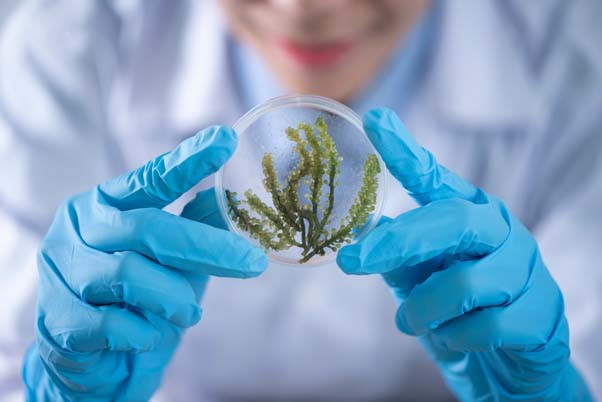
Prerequisite: Biology, Grade 11, University Preparation
This course explores rights and responsibilities associated with being an active citizen in a democratic society. Students will explore issues of civic importance such as healthy schools, community planning, environmental responsibility, and the influence of social media, while developing their understanding of the role of civic engagement and of political processes in the local, national, and/or global community. Students will apply the concepts of political thinking and the political inquiry process to investigate, and express informed opinions about, a range of political issues and developments that are both of significance in today’s world and of personal interest to them.
Prerequisite: None

This course teaches students how to develop and achieve personal goals for future learning, work, and community involvement. Students will assess their interests, skills, and characteristics and investigate current economic and workplace trends, work opportunities, and ways to search for work.The course explores postsecondary learning and career options, prepares students for managing work and life transitions, and helps students focus on their goals through the development of a career plan.
Prerequisite: None
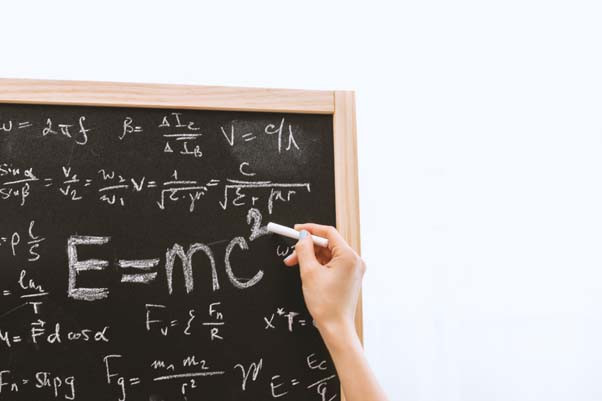
This course enables students to deepen their understanding of physics concepts and theories. Students will continue their exploration of energy transformations and the forces that affect motion, and will investigate electrical, gravitational, and magnetic fields and electromagnetic radiation. Students will also explore the wave nature of light, quantum mechanics, and special relativity. They will further develop their scientific investigation skills, learning, for example, how to analyse, qualitatively and quantitatively, data related to a variety of physics concepts and principles. Students will also consider the impact of technological applications of physics on society and the environment.
Prerequisite: Physics, Grade 11, University Preparation

This course is designed to extend the range of oral communication, reading, writing, and media literacy skills that students need for success in their secondary school academic programs and in their daily lives. Students will analyse literary texts from contemporary and historical periods, interpret and evaluate informational and graphic texts, and create oral, written, and media texts in a variety of forms. An important focus will be on the selective use of strategies that contribute to effective communication. This course is intended to prepare students for the compulsory Grade 11 university or college preparation course.
Prerequisite: English, Grade 9, Academic or Applied

Chemistry is the study of matter and energy and the interactions between them. This is also the definition for physics, by the way. Chemistry and physics are specializations of physical science. Chemistry tends to focus on the properties of substances and the interactions between different types of matter, particularly reactions that involve electrons. Physics tends to focus more on the nuclear part of the atom, as well as the subatomic realm. Really, they are two sides of the same coin.
The formal definition of chemistry is probably what you want to use if you’re asked this question on a test.
Why Study Chemistry?
Because understanding chemistry helps you to understand the world around you. Cooking is chemistry. Everything you can touch or taste or smell is a chemical. When you study chemistry, you come to understand a bit about how things work. Chemistry isn’t secret knowledge, useless to anyone but a scientist. It’s the explanation for everyday things, like why laundry detergent works better in hot water or how baking soda works or why not all pain relievers work equally well on a headache. If you know some chemistry, you can make educated choices about everyday products that you use.
What Fields of Study Use Chemistry?
You could use chemistry in most fields, but it’s commonly seen in the sciences and in medicine. Chemists, physicists, biologists, and engineers study chemistry. Doctors, nurses, dentists, pharmacists, physical therapists, and veterinarians all take chemistry courses. Science teachers study chemistry. Firefighters and people who make fireworks learn about chemistry. So do truck drivers, plumbers, artists, hairdressers, chefs… the list is extensive.

Biology is the study of living things. It encompasses the cellular basis of living things, the energy metabolism that underlies the activities of life, and the genetic basis for inheritance in organisms. Biology also includes the study of evolutionary relationships among organisms and the diversity of life on Earth. It considers the biology of microorganisms, plants, and animals, for example, and it brings together the structural and functional relationships that underlie their day-to-day activities. Biology draws on the sciences of chemistry and physics for its foundations and applies the laws of these disciplines to living things.

The human body is a complex, highly organized structure made up of unique cells that work together to accomplish the specific functions necessary for sustaining life.
The biology of the human body includes
Physiology (how the body functions)
Anatomy (how the body is structured)
Anatomy is organized by levels, from the smallest components of cells to the largest organs and their relationships to other organs.
Gross anatomy is the study of the body’s organs as seen with the naked eye during visual inspection and when the body is cut open for examination (dissection).
Cellular anatomy is the study of cells and their components, which can be observed only with the use of special techniques and special instruments such as microscopes.
Molecular anatomy (often called molecular biology) is the study of the smallest components of cells at the biochemical level.
Anatomy and physiology change remarkably between fertilization and birth. After birth, the rate of anatomic and physiologic changes slows, but childhood is still a time of remarkable growth and development (see Physical Growth of Infants and Children). Some anatomic changes occur past adulthood, but the physiologic changes in the body’s cells and organs are what contribute most to what we experience as aging (see Changes in the Body With Aging).
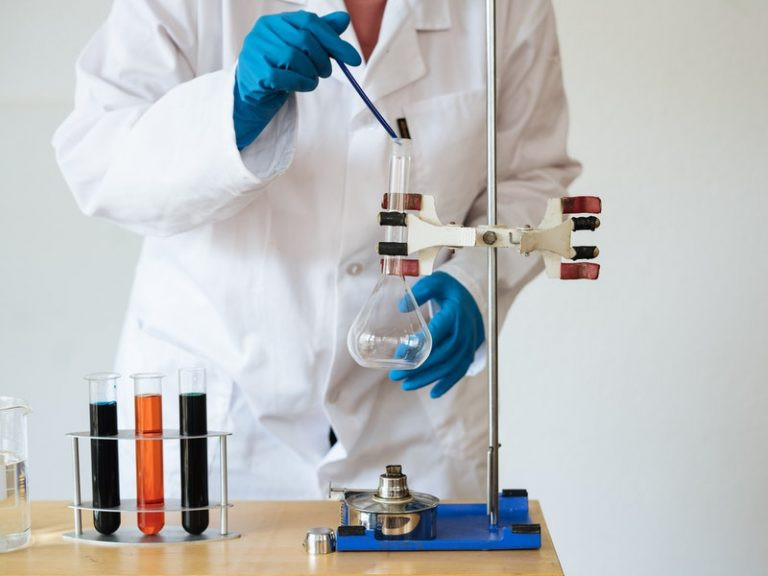
Organic chemistry is the study of “living” things—not in the same way that biology is the study of life. Rather, organic chemistry takes a look at what composes the living things, and how they’re structured. Organic chemistry breaks down living things not only into organs seen in organisms, but goes a step further to break down those organs into atoms and molecules. It focuses mainly on carbon, which is highly essential to maintaining life, and particularly zeroes in on the hydrocarbon, which is a molecule composed of hydrogen and carbon. Hydrocarbons not only compose what we’re made of, but also what we consume, including carbohydrates, proteins, steroids, fats, and more! As a matter of fact, you may be surprised to know that everyday things, such as caffeine, plastic, and paint are all composed of hydrocarbons!
